Charles Darwin would have celebrated his 200th birthday this year. And his magnum opus, On the Origin of Species by Means of Natural Selection has its 150th anniversary.
It is difficult to underestimate Darwin’s legacy for 20th and 21st century thought: his theory was largely accepted during his lifetime despite a tidal wave of controversy at its launch, and the fact that it was not confirmed experimentally until 20th Century.
But just what does the theory of evolution mean for ecology, and for environmentalism? Does it explain how we should respond to and interact with the natural world? Does it shine a light on the current ecological crisis? Is it even helpful to think of nature purely in evolutionary terms?
As with all great theories, the idea behind the theory of evolution is in fact really simple. It goes like this: what if species are not fixed entities?
Think of the following: a given habitat does not have enough resources for a population. It follows that some individuals from that population will die before they can reproduce. Others, which have slightly different characteristics, may be better suited to survive.
The mechanism tugging at a species leading to the preservation of some variants and the elimination of others is called ‘natural selection’. It’s a famous phrase, but the term fails to indicate the randomness by which natural selection occurs. A better term – one which Darwin later admitted he should have used - would be ‘natural preservation’. Variants that have a certain edge compared to others mean their owners get to reproduce, whereas those which are less well adapted die early or cannot find a partner for reproduction.
Natural preservation is determined by several factors, such as food supply, climate, the disposition of the sexual partners and the predator pressure. A change in one of these factors can potentially benefit one member of a species, and lead to their survival and prosperity. Eventually, a new species might evolve.
But these conditions do not conspire to create the ‘perfect’ form. Trade-offs are inevitable. Evolution is therefore not a ‘ladder’ leading to the best adapted of all species. Instead, the whole apparatus functions pretty randomly, meaning that the metaphor of choice should be a tree with many different, tangled branches symbolising the different factors that influence species and their relationships. The tree metaphor illustrates that each twig is meaningful: a tree does not grow with the purpose of producing one 'special' branch.
Evolution and Ecology
Without the theory of evolution, ecology as it exists today could not have developed. Darwin himself did not use the term ecology, but he was the first to point out the way all living things are inherently connected. The actual term ‘ecology’ was coined in 1866 by Ernst Haeckel, an admirer of Darwin’s.
Without Darwin the way disturbances in the environment can affect living creatures would be a complete mystery to us. Take climate change. We know that climate change will drastically alter biodiversity: many species will become extinct; new ones might evolve. This is because many species are set in a fragile connection with their environment and even the slightest changes in conditions can affect them severely. Changing conditions might favour different species. Variety might be lost, and not necessarily where human beings might choose it. To put it bluntly, cockroaches will have fewer problems than polar bears. And we can only foresee and act against these things by knowing our Darwin.
A moral lesson from evolution?
But why is it a problem to lose biodiversity on the planet in the first place? The question is heresy to most environmentalists, but it is worth pointing out that no answer to it is supplied by the theory of evolution. Evolution is something that happens at random and pursues no goals, offers no justifications, and has no moral.
Moral purpose is to the domain of mankind, although evolution can be (and often is) hitched to morality at some peculiar points. According to the German philosopher of science Thomas Potthast, the ongoing debate over the safety of genetic modification is a case in point.
Potthast’s research has showed that those who are in favour of GM argue (amongst other things) that the technology is not that different to natural selection, and that human interests are preserved through copying mechanisms of evolution.
Opponents of GM counter that by altering the genetic material of certain individuals within a species, the natural flow of evolution is disturbed. Furthermore, they say, the complexity of the mechanisms of evolution mean that it is impossible to foresee the consequences of altering the genetic stock of a population in the long run.
Pick 'n' Mix
Evolution can, then, to a certain extent be what you make of it. And the theory has its dark side too. Take Social Darwinism – the projection of some of Darwin’s observations of nature onto human society, suggesting that unfettered competition is healthy, natural and productive.
The notion had been considered even before Darwin set sail on the HMS Beagle, but he himself had hardly anything to do with it. Yet Darwin's research underpins its core concepts.
Taken to its logical extreme Social Darwinism essentially fosters uncontrolled markets and non-interventionist politics, which, as the financial crisis has shown, spell bad news both for people and the environment.
Social Darwinism was also used to legitimate colonialism as an expression of the notion that in the ‘struggle of existence’, the stronger party has the right to overcome the weaker party and claim territory.
The concept is a dangerous misperception: although human beings are products of evolution and are descended from apes, that doesn’t mean that their social structures must function according to the ‘survival of the fittest’ (a catchphrase Darwin didn’t use). Social Darwinism is not only dangerous for society, it also doesn’t grasp the kernel of evolution. Evolution doesn’t necessarily mean things improve for the best, nor is it strength and power that are automatically desirable, but rather flexibility.
But despite the inappropriateness of Social Darwinism, the theory of evolution itself still offers a fairly grim view of the natural world. One could argue, for example, that species loss due to climate change is really not a problem. Adapt or die, so to speak.
The theory of evolution doesn’t know Gaia and mother earth. Life forms do not interact in a 'circle of life', but in a struggle for existence. And from an evolutionary point of view, sharks are more worthy of preservation than pandas.
Ecology under the cross?
These are ideas that have sat uncomfortably with environmentalists for decades, including the Ecologist’s founder Edward Goldsmith, who struggled with the idea that evolution could be purely random and contain no purpose.
It is perhaps unsurprising then, that some have been drawn towards more spiritual conceptions of environmentalism. Christians, for example, hold that a belief in God as creator gives the sense of responsibility towards nature that is needed in order to preserve it. Mankind is seen as God’s steward, who has creation at his disposal but must handle it with care.
But monotheistic attitudes towards the natural world immediately throw up difficulties. The Judeo-Christian notion of man as the crown of creation teaches a fundamental separation between human beings and the rest of the world, as the historian Lynn White has pointed out.
The Bible describes a world that is basically at man’s disposal:
'Be fruitful, and multiply, and replenish the earth, and subdue it,' commands the Book of Genesis. Is that really a motto under which to try to save the environment?
White even sees the roots of environmental destruction exactly in this world view, because of its tendency to foster an indifference towards the processes of the natural world, especially when it comes to the benefits mankind can reap through the destruction of nature.
A secular ethic
So how about a solution with ethics but less anthropocentrism? Arne Naess, founder of the Deep Ecology branch of philosophy, strived for an ethic that would regard human beings as part of wildlife and the whole of wildlife as one system, whereby the whole system is superior to any part of it. But in many ways, such a notion is only possible in the first place because of the theory of evolution. Deep Ecology could never exist without Darwin’s findings. After all, Darwin was the first to actually show man his place in nature.
And this, at root, may be Darwin’s legacy to environmentalists. His theories should teach us humility, since they argue that every living thing on the planet has a common ancestry. As Mark Pallen, Professor for Microbial Genomics puts it, ‘However alien these organisms [i. e. cats, dogs, bees or zebrafish] seem to you, Darwin’s notion of common ancestry means that you are related to them in the same way that you are related to your human relatives’.
Perhaps tempering environmentalism with a healthy dose of Darwinism may even lead us to challenge long-held beliefs. Having studied his Darwin, Peter Bridgewater, Chair of the UK Government’s Joint Nature Conservation Committee (JNCC), recently called for a pragmatic attitude towards the fight against biodiversity loss.
‘Loss cannot be prevented, but it can be managed,’ he said. ‘Novel ecosystems are being created, and these offer hope for the fight against loss, and also help with adaptation to climate change.’
He may have ruffled the feathers of conservationists, but his perspective is one that fuses environmentalism with Darwinism precisely because of its amorality.
Being aware of ecology necessarily means being aware of evolution, of its entire dynamic and randomness. Sometimes, this might entail casting aside the images of nature that we have grown to love. But it also means that above all, mankind is part of nature. The logic behind evolution might at times be frightening, but it also offers hope for a more realistic understanding of our place in this world.
Amelie Wachner is a researcher in social and environmental science. She holds degrees in Biology and Media Studies
| READ MORE... | |
 |
COMMENT Invasive species - are they always bad news? Native species = good; invasive species = bad, right? Not necessarily, says Dr Peter Bridgewater. Try taking a longer term view of ecology... |
 |
NEWS Habitats report shows sorry state of EU biodiversity A report by the European Commission shows that habitat and wildlife protection targets across Europe will be missed, with nine out of 10 UK habitats found to be in 'unfavourable' condition |
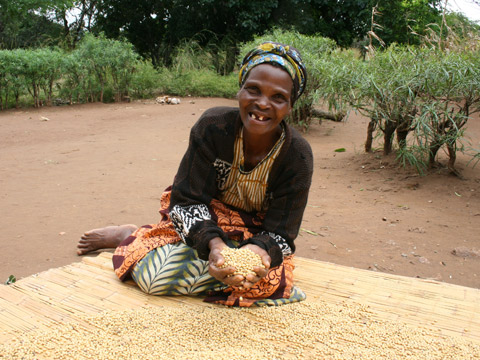 |
COMMENT Africa doesn't need a green revolution. It needs agroecology Green Revolution architect Norman Borlaug is credited with 'feeding India'. But the feat took more than hybrid varieties and fertiliser, and it will take a much more sophisticated approach to help Africa feed itself |
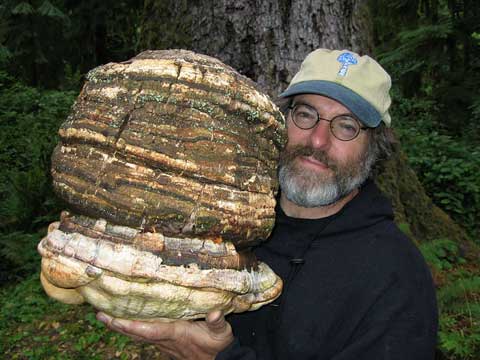 |
TAKE ACTION Can mushrooms save the world? The potential of fungi for medicine, filtering polluted water, controlling pests and even biofuels, is truly staggering |