Study findings go against conventional wisdom that says biodiversity conservation is not compatible with development goals
Related Articles
- This week's changes to the Ecologist.org
- Climate change 'will wreak havoc on Britain's coastline by 2050'
- Huhne accused of 'hypocrisy' for promoting offshore oil in Scotland and Arctic
- Tanzania urged to accept World Bank funding of alternative Serengeti highway route
- UK's 'fracking' gas-extraction is not unconventional says industry
Protecting rainforests shown to reduce poverty
Ecologist
28th May, 2010
Introduction of measures to protect rainforests and ecosystems in Costa Rica and Thailand over the past 40 years have improved the livelihoods of the local population
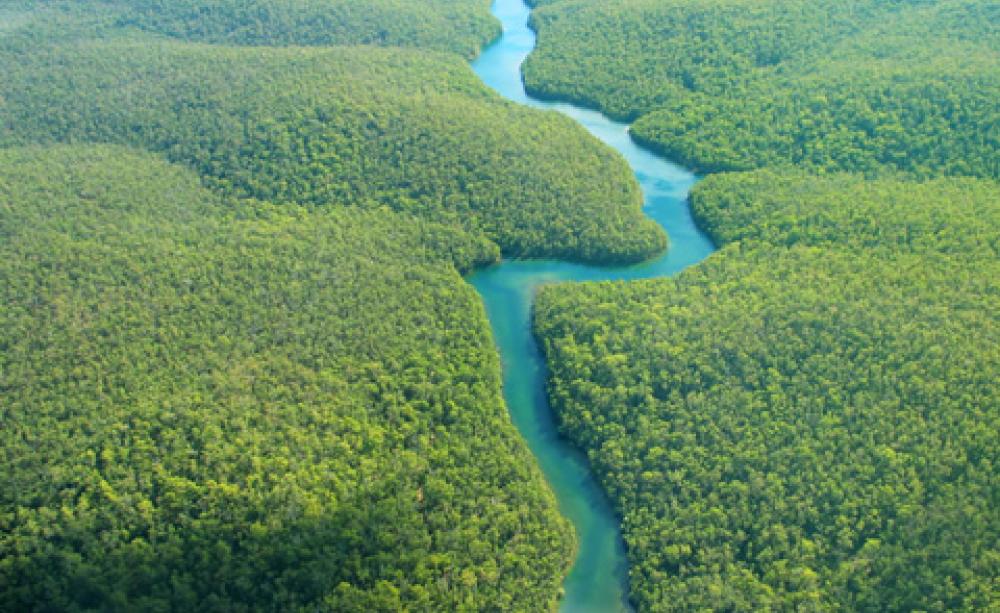
Conserving rainforests may help to reduce poverty as well as protect biodversity, according to analyses undertaken in Costa Rica and Thailand.
Researchers from Georgia State University looked at the long term impacts of poor people living near parks and reserves set up before 1985 and found the net impact of the protection was to alleviate poverty.
Study author Professor Paul Ferraro said the findings went against the conventional wisdom that says biodiversity conservation was not compatible with development goals.
'The results are surprising. Most people might expect that if you restrict resources, people on average will be worse off. In contrast, the results indicate that the net impact of ecosystem protection was to alleviate poverty,' he said.
REDD agreement
The findings come as seven countries; Norway, Germany, US, UK, Australia, Japan, France commit to funding projects that will protect rainforests.
At a meeting in Oslo this week they reached an interim agreement to help get REDD projects (Reducing Emissions from Deforestation and forest Degradation) up and running while they wait for an international agreement on tackling climate change. A new body to manage the funds will be set up by the end of the year.
Eco-tourism factor
Professor Ferraro admitted that the countries analysed in his study, Costa Rica and Thailand, may not representative of all developing nations having both experienced rapid economic growth within relatively stable political systems.
He also said the study did not look at the reasons behind the fall in poverty. However, he believes the expanding eco-tourism sectors in both countries may have played a significant part.
'The question we need to answer now is whether poverty is being reduced through ecosystem protection per se or because tourists come to see the biological diversity or because the protection maintains the supply of other valuable ecosystem services,' he said. 'Or is poverty reduced through donor investments in development activities and enhanced roads and public services (e.g. electricity and water infrastructure) that often accompany the establishment of a protected area?'
The Rainforest Foundation said the findings indicated that protected areas could have a positive, rather than the usually negative, impact on poverty alleviation in poor countries in and around areas for biodiversity.
'However, they have to be treated with caution, as we do not know from the study whether specific 'pro-community' measures were in place in the cases studied, as these tend to be the exception rather than the rule, and could distort the findings of this study,' said UK executive director Simon Counsell.
Useful links
Protected areas reduced poverty in Costa Rica and Thailand

| READ MORE... | |
![]() |
INVESTIGATION Why only the Amazonians can save the rainforest 'Saving the rainforest' has been a battle-cry of the environmental movement since its inception. But just what does that mean, how does it work, and who exactly does the 'saving'? |
![]() |
NEWS Biodiversity crucial to lives of billions, says UNEP Ecosystems are buffering humanity against the worst impacts of global warming and also alleviating poverty, says United Nations Environment Programme (UNEP) |
![]() |
SPECIAL CONTENT Atlantic Rising: Liberia faces choice between deforestation and REDD If alternatives to deforestation like REDD do not arrive soon Liberia's remaining rainforest cover is likely to go the same way as its neighbours in Cote d'Ivoire |
![]() |
NEWS Activists hail 'historic' Canadian forest agreement Logging companies agree to deal safeguarding an area of endangered boreal forest twice the size of Germany |
![]() |
NEWS Clamping down on logging in Brazil moves it to Paraguay Former Paraguayan government minister makes plea for West to intervene in runaway illegal logging situation displaced from Brazil |
Previous Articles...
Users Comments
Re: Protecting rainforests shown to reduce povertyPacific Northwest Rainforest News...
Southern Oregon Coast Mixing Nature, Tradition, and Economics for Sustainable Future - (http://www.nxtbook.com/nxtbooks/sldt/0509/#/24)
Written by Monica Fischer and Brent Lawrence
As European expansion moved ever westward, southwest Oregon was one of the last regions to be settled. However, the area’s abundant natural resources proved to be a very valuable commodity and served as an unavoidable enticement.
Almost all old-growth forests were logged in the late 1880s and early 1900s... Mining, forestry and fisheries depleted the natural resources of southwest Oregon in relative short order. By the 1980s, most of the larger lumber mills were shut down.
Over the past 25 years, the southern Oregon coast has transitioned from a traditional forestry and fisheries economy to one based on tourism, services, agriculture and some light manufacturing. The county boasts an abundance of cranberry and blueberry crops. Situated in the “Klamath Knot”, this unique eco-region is considered a global center of biodiversity and has the highest conifer diversity in the world, with over 30 species of conifers alone, including the Brewer’s Spruce – the last conifer species discovered in North America in 1884...
One of the more progressive areas the region, when it comes to sustainability and economic growth, is the small community of Port Orford. With a current population of just over 1,000 residents, Port Orford - established in 1851 - was the first on the Oregon Coast...
Ocean Mountain Ranch – A Model for Sustainable Land Development
Located along a 1000’ ridgetop in the headwaters of the Port Orford Community Stewardship Area, Ocean Mountain Ranch (OMR) overlooks the entire proposed marine reserve and the largest remaining old growth forest on the southern coast in Humbug Mountain State Park. OMR is planned to be developed pursuant to a forest stewardship management plan which has been approved by the Oregon Department of Forestry and Northwest Certified Forestry under the high standards of the Forest Stewardship Council (FSC). OMR will provide for long-term yield of high-quality hardwood, softwood, and wildlife habitat and is planned to provide a model for exemplary organic forestry/grazing operation incorporating residential, agricultural, educational, recreational, and industrial activities. OMR is also serving as a pilot program and is expected to achieve certification as a SLDI-Certified Sustainable Project...
Working within the structures outlined by the various government agencies, including Oregon LCDC guidelines and Curry County zoning regulations, OMR plans to seek approval from Curry County officials for a consolidated application containing a mixture of permitted and conditional forestry-grazing zoning uses to provide an exemplary demonstration project which will:
Promote and educate landowners about sustainable forestry practices,
Provide a forestry consulting resource to woodland owners,
Link local wood producers to emerging markets,
Facilitate community-based forestry projects,
Explore woody biomass utilization opportunities,
Promote and assist in fire fuels reduction efforts,
Assist landowners in exploring opportunities in ecosystem services (carbon credits, conservation easements, etc).
It is OMR’s wish to work in tandem with the Port Orford Community Stewardship Area in its quest to establish and protect the proposed marine reserve, and it is the ongoing quest of SLDI and OMR to continue to foster collaborative work that will promote communal, ecological and economical sustainability as the primary principles of a “people, planet and profit” land development philosophy. |