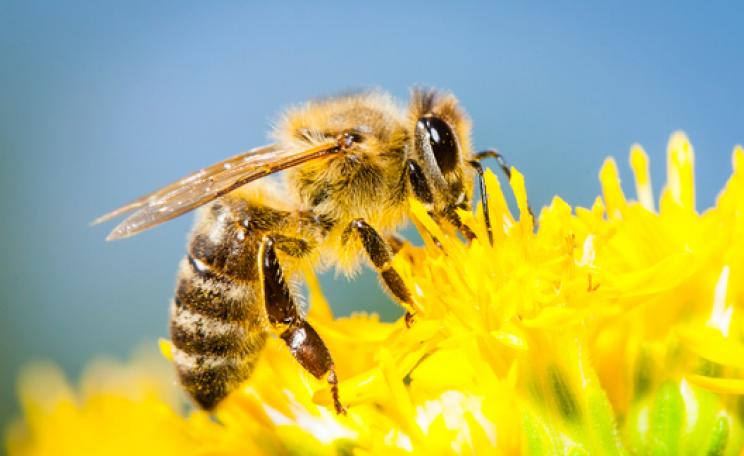
The decline in wild habitat and forage is the most significant long-term threat to honey bee populations in Europe and the US, according to the UK's only Professor of Apiculture.
Campaign groups including the Soil Association and Buglife claim certain pesticides should be banned because they weaken the insects' immune system and damage honeybee populations.
However, in a newly published summary of the evidence behind bee colony losses, published in the journal Science, Professor Ratniek from the University of Sussex, said pesticides had been seriously considered and stimulated much research but were not the most important cause.
Pesticides not to blame
Speaking this week, he said campaigners were wrong to keep pointing the finger of blame at them.
'Personally, I think there are people that want to put the blame on certain factors that fit their worldview. People want to blame pesticides but I think it is highly unlikely. We're not saying they are good for bees but they are not to blame for the declines,' he said this week.
Professor Ratniek said he thought that it was the diminishing amount of forage available to honey bee populations rather than pesticides that was likely to be their biggest long-term threat.
'If you want a healthy beehive they need an abundant food supply. In the UK there has been a fall in flowers due to the intensification of farmland and similarly so in the US.'
Pollen substitutes
He said the pollen substitutes used by beekeepers to feed their bees and keep them productive were not adequate replacements: 'no beekeepers think substitutes are as good as nectar'.
Professor Ratniek's summary also highlights the 'worrying downward trend' in beehives, which in the US have fallen from 6 million in 1945 to 2.4 million today.
He said the fall was likely to affect agriculture badly, with only the few high-value crops, like the Californian almond crop, likely to be able to afford to use commercial beekeepers to pollinate their crops.
'...what will be the wider economic cost arising from crops that have modest yield increases from honey bee populations? These crops cannot pay large pollination fees but have hitherto benefited from an abundance of honey bees providing free pollination,' he said.
Useful links
Clarity on Honey Bee Collapse
Nutritional stress due to habitat loss may explain recent honeybee colony collapses
Sussex University - Laboratory of Apiculture and Social Insects

| READ MORE... | |
 |
NEWS Extinct bumblebee will return to Britain in 2010 Short-haired bumblebee to be brought back from New Zealand and reintroduced into Kent |
 |
GREEN LIVING How best to create a wildlife-friendly garden? First, relax London's Pestival bugfest is back - showcasing a lazy gardener's dream and other ways to show our six-legged friends some love |
 |
NEWS ANALYSIS Agri-chemical companies are both breeding and killing bees Agri-chemical companies like Syngenta make the chemicals that have been blamed for the decline in bees and also breed the bees that are being used as a replacement for wild pollinators |
 |
HOW TO MAKE A DIFFERENCE Help protect our honeybees Neonicotinoid pesticides are killing our honeybees. Sign the Soil Association petition to help get it banned. Then take part in Twitter's 'Tweehive' - starting on 14th July |
|
NEWS Renewed call for pesticide ban to protect bees Previous calls to ban neonicotinoids have been turned down by the UK government because of lack of evidence |